Oh I do like to be beside the seaside…
In early June the Better Half and I took a well-earned break for a week, heading across the country to hike the coast around the North York Moors. That means places like Whitby, Staithes, Robin Hood’s Bay, the North York Moors National Park…
And Saltburn-by-the-Sea.
Whilst early records highlight the old town’s use as a smuggler’s haven, Saltburn-by-the-Sea began to grow with the discovery of ironstone in the Cleveland Hills. Railways were built along the coast to transport the minerals extracted, and the Pease family (who owned the Middlebrough Estate and the railway through it) developed Saltburn according to Henry Pease’s “vision”.
With the mining of ironstone now long gone, Saltburn was soon established as a seaside resort, with a pier, miniature railway, Victorian houses, and one of the world’s oldest water-powered funiculars, the Saltburn Cliff Lift.
Conditions could not have been nicer to explore the town, its beach, and the cliff walk.
All photos taken on my iPhone 17 Pro Max. RAWs developed in Lightroom, then edited and finalised in Photoshop.
Saltburn-by-the-Sea, Redcar & Cleveland, North Yorkshire, Summer © 2026 by Ian Cylkowski is licensed under CC BY-NC-SA 4.0.
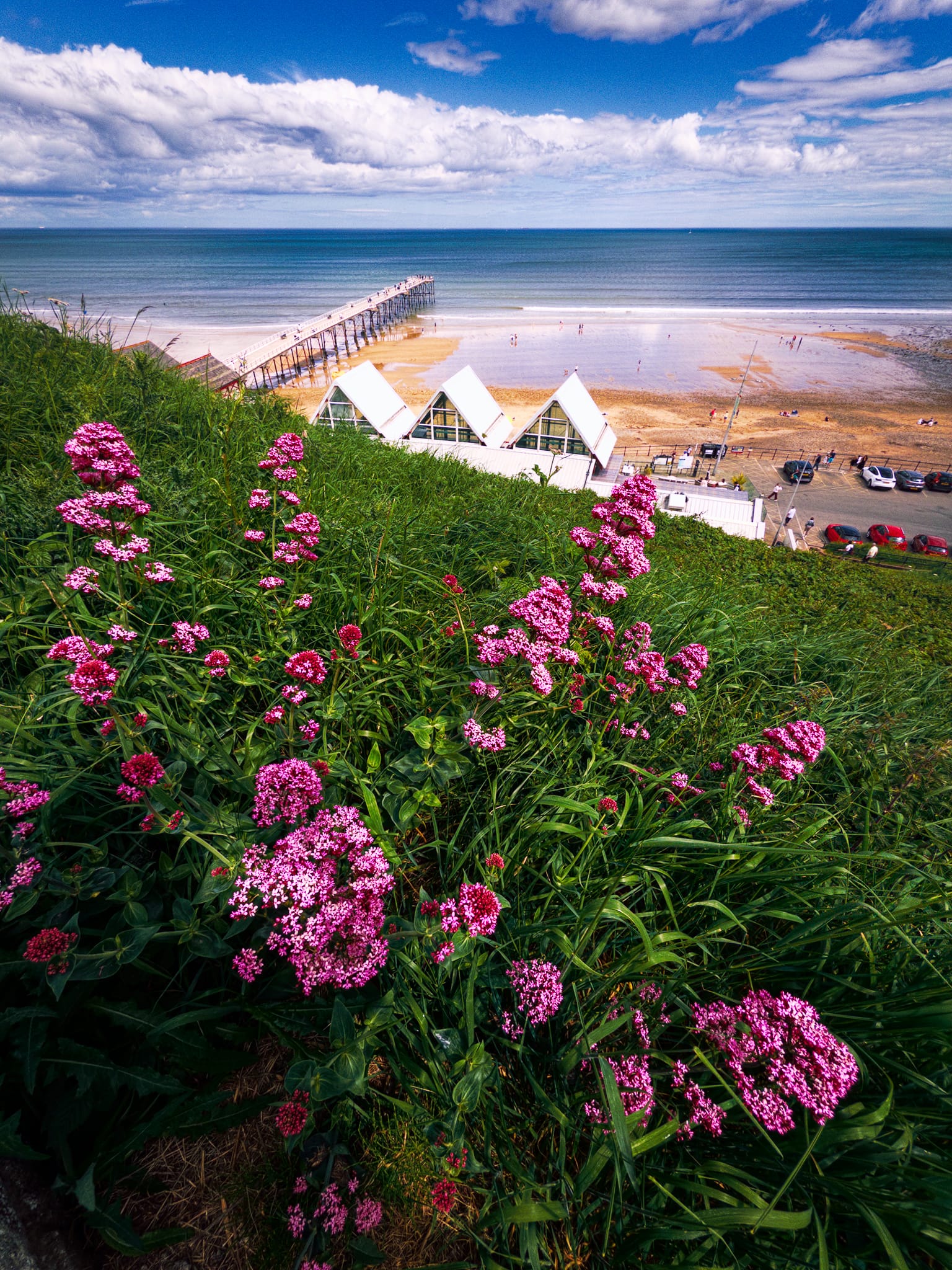
Our first instinct was to take the steps up the cliff into the town proper, see what views we could enjoy. Along the way, these beautiful Red Valerian (Centranthus ruber) provided a lovely foreground interest for this composition looking down at Saltburn’s beach and its pier.
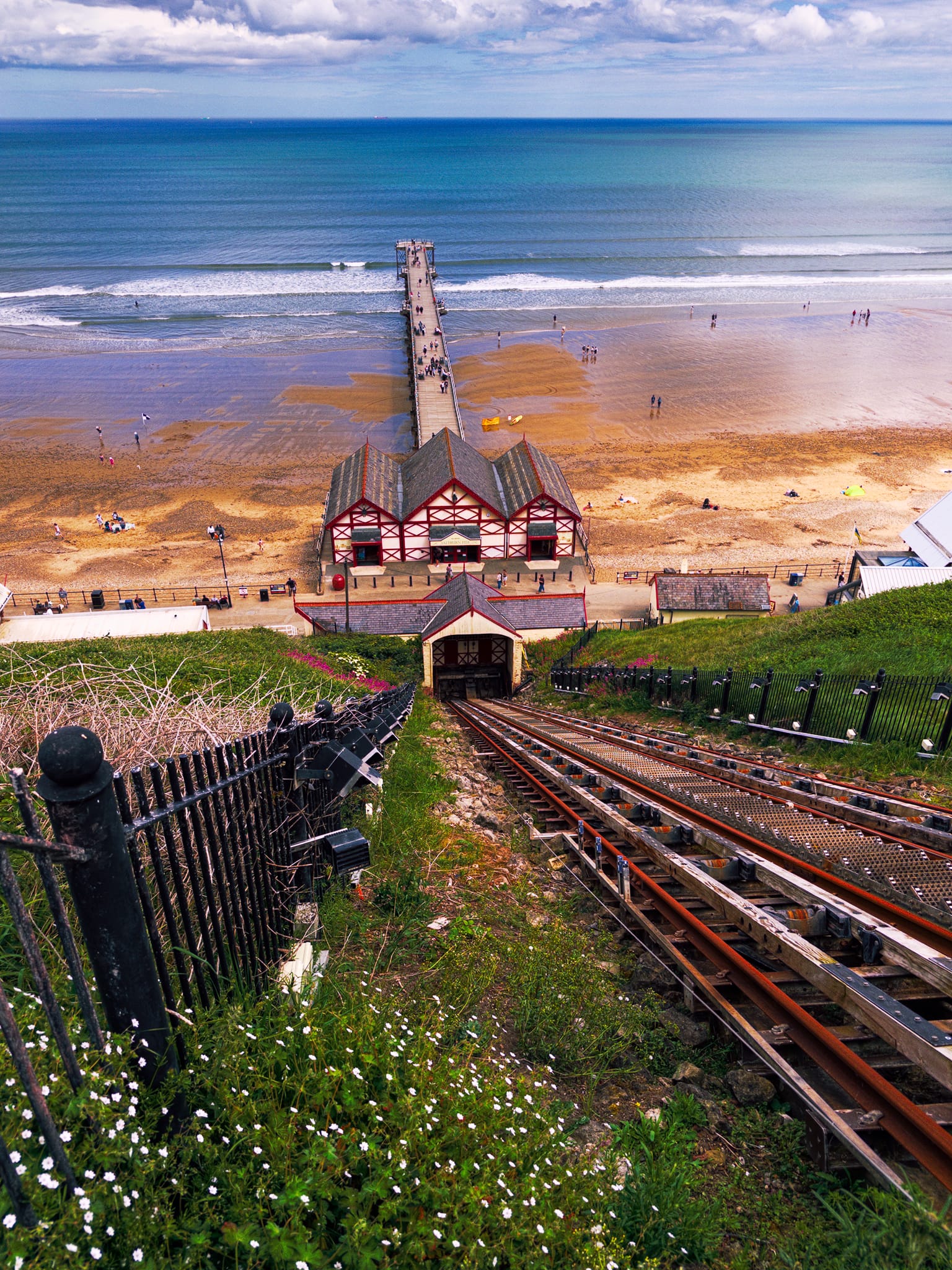
Unfortunately the Saltburn Cliff Lift was out of commission, having two of its cars repaired. But that did mean we could enjoy the view all the way down its tracks to the beach and the pier.
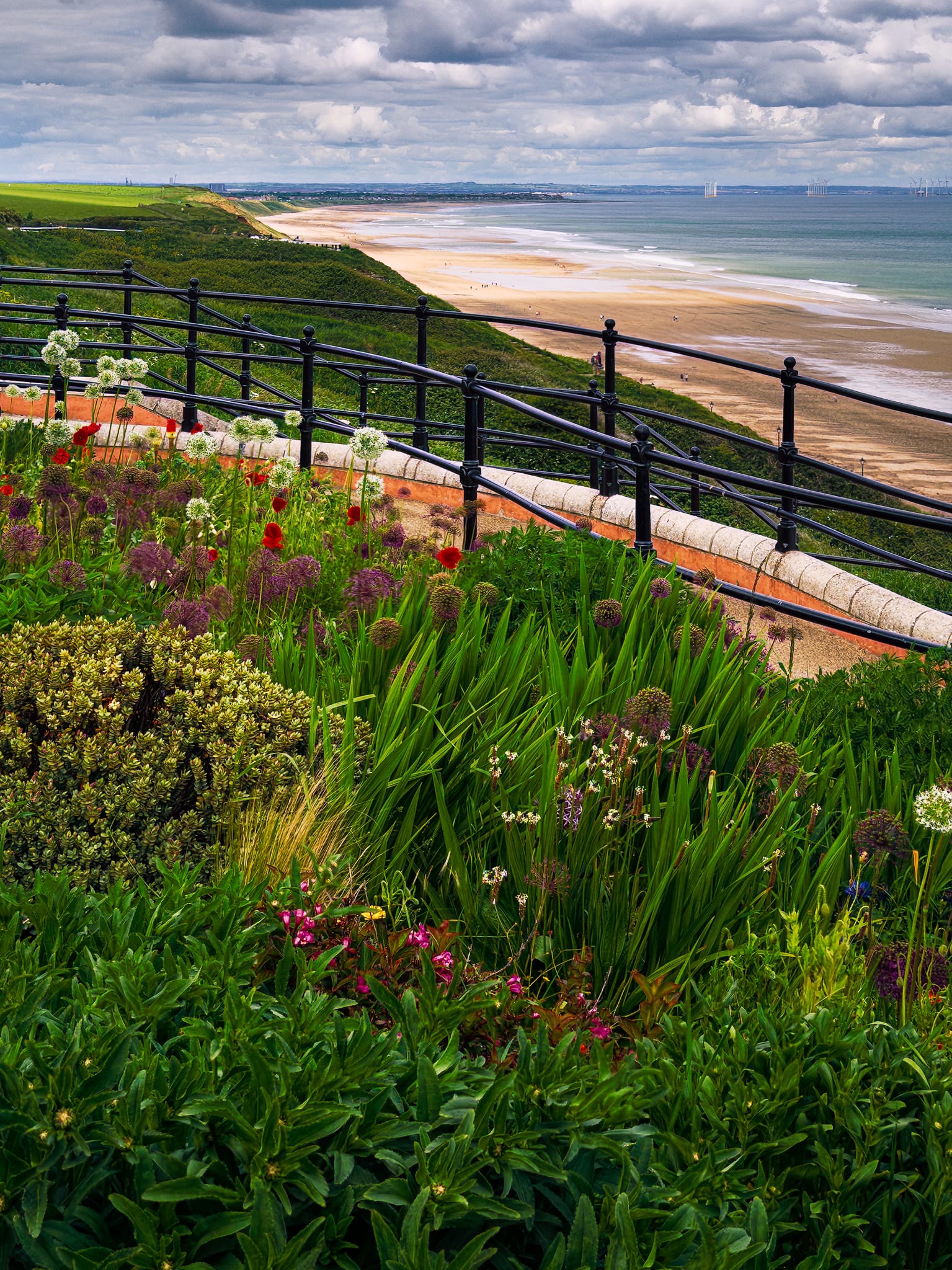
Along the promenade, visitors can enjoy the Saltburn Fossil Garden, established in 2018 for the enjoyment of all.
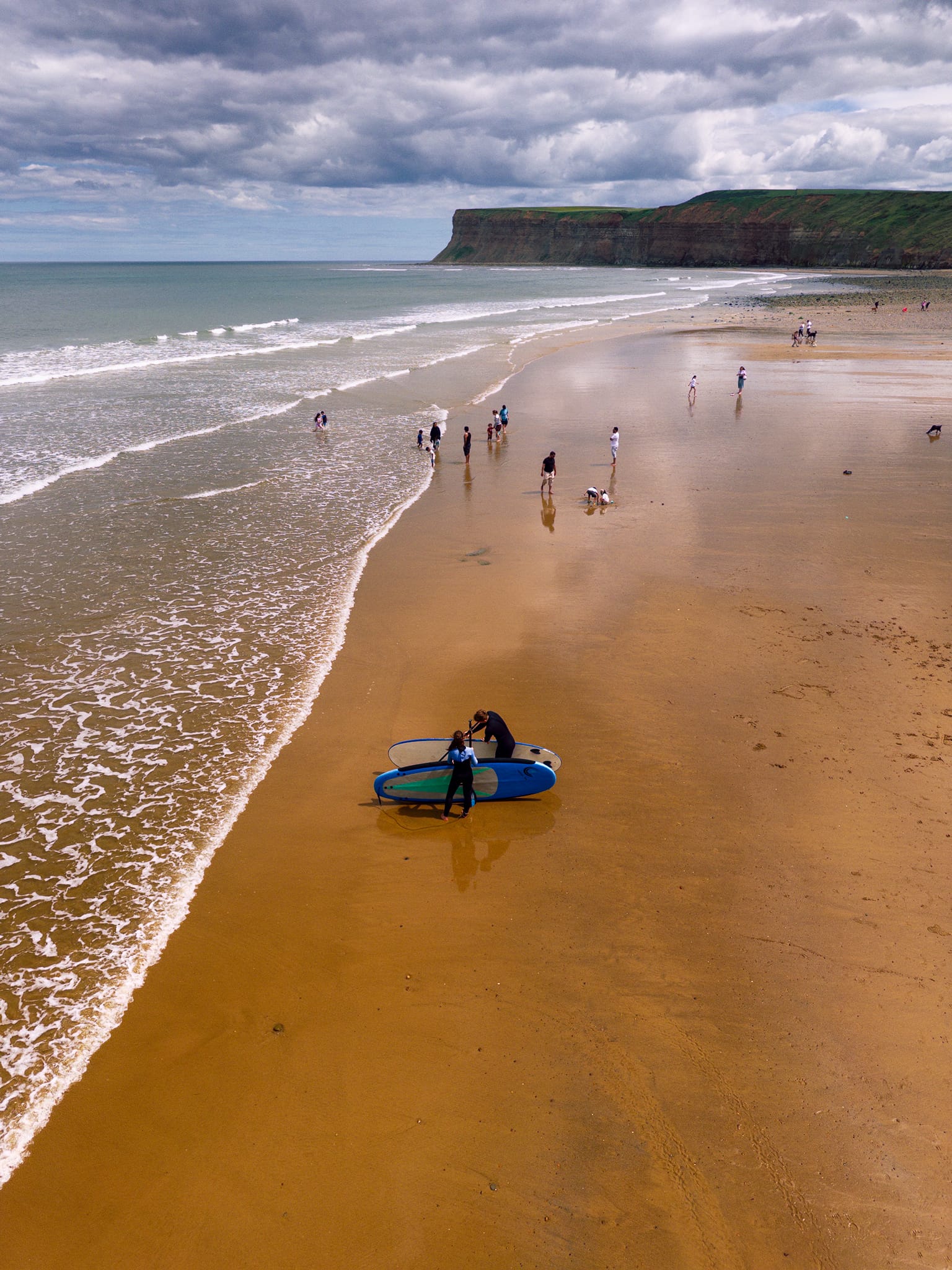
Though a nice day, it were definitely windy, with a few surfers catching the waves that the winds brought.
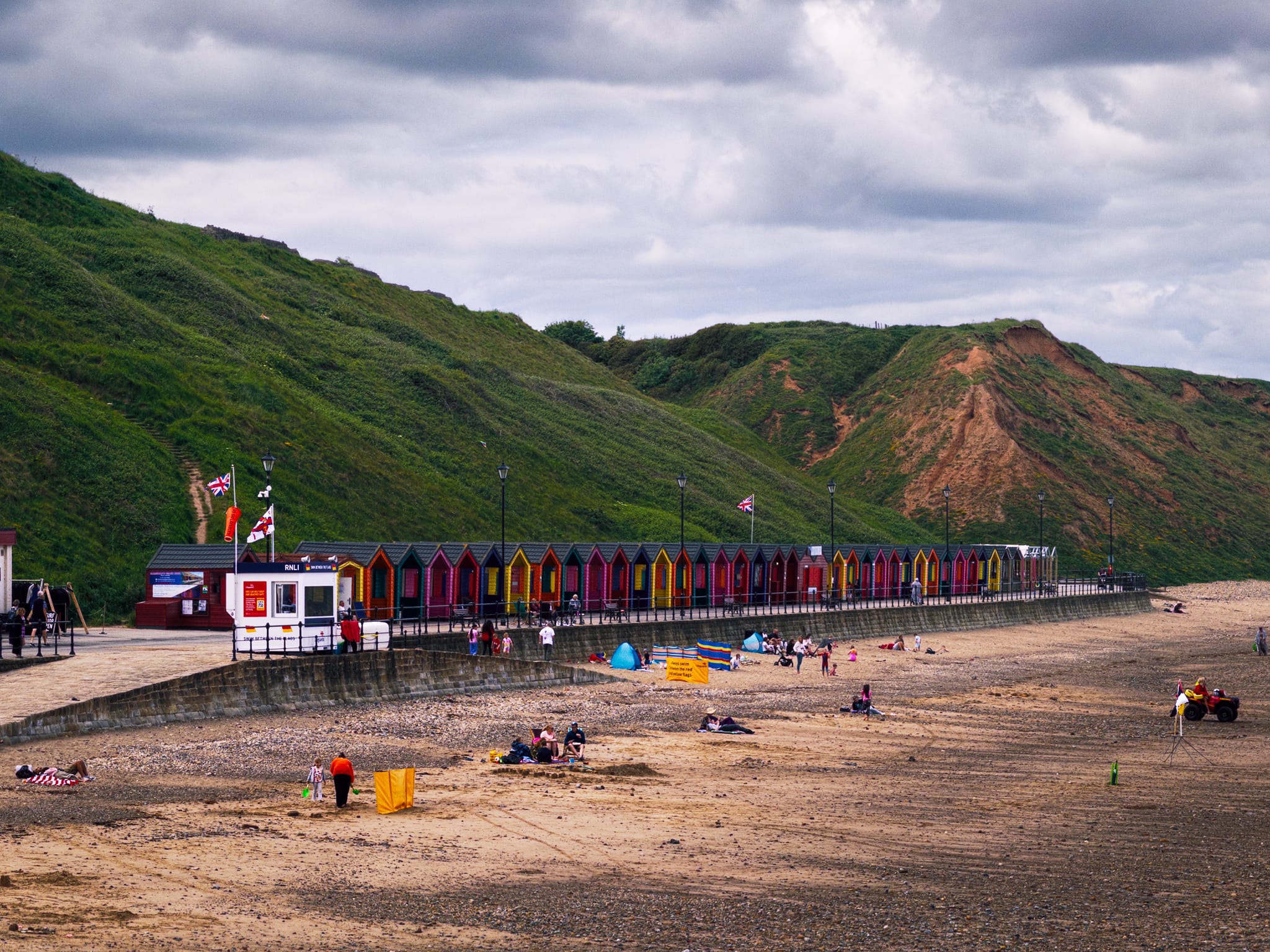
At the beach, a row of beach huts caught my eye, resplendent in their bold colours and style reminiscent of traditional, mid-20th-century British beach huts.
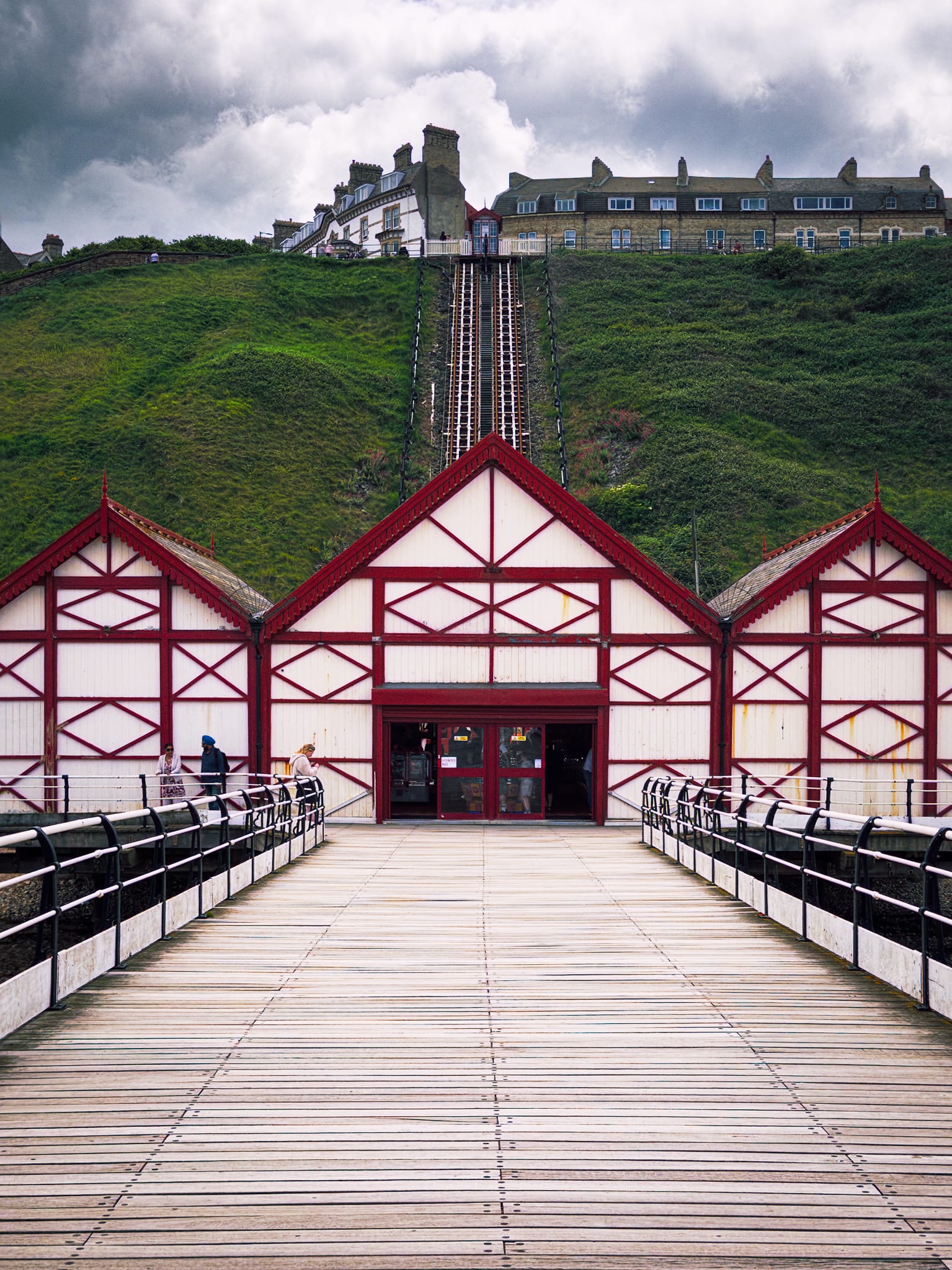
Of course, we had to check out the pier. Looking back, a clear composition of the Arcades and the Cliff Lift is hard to ignore.
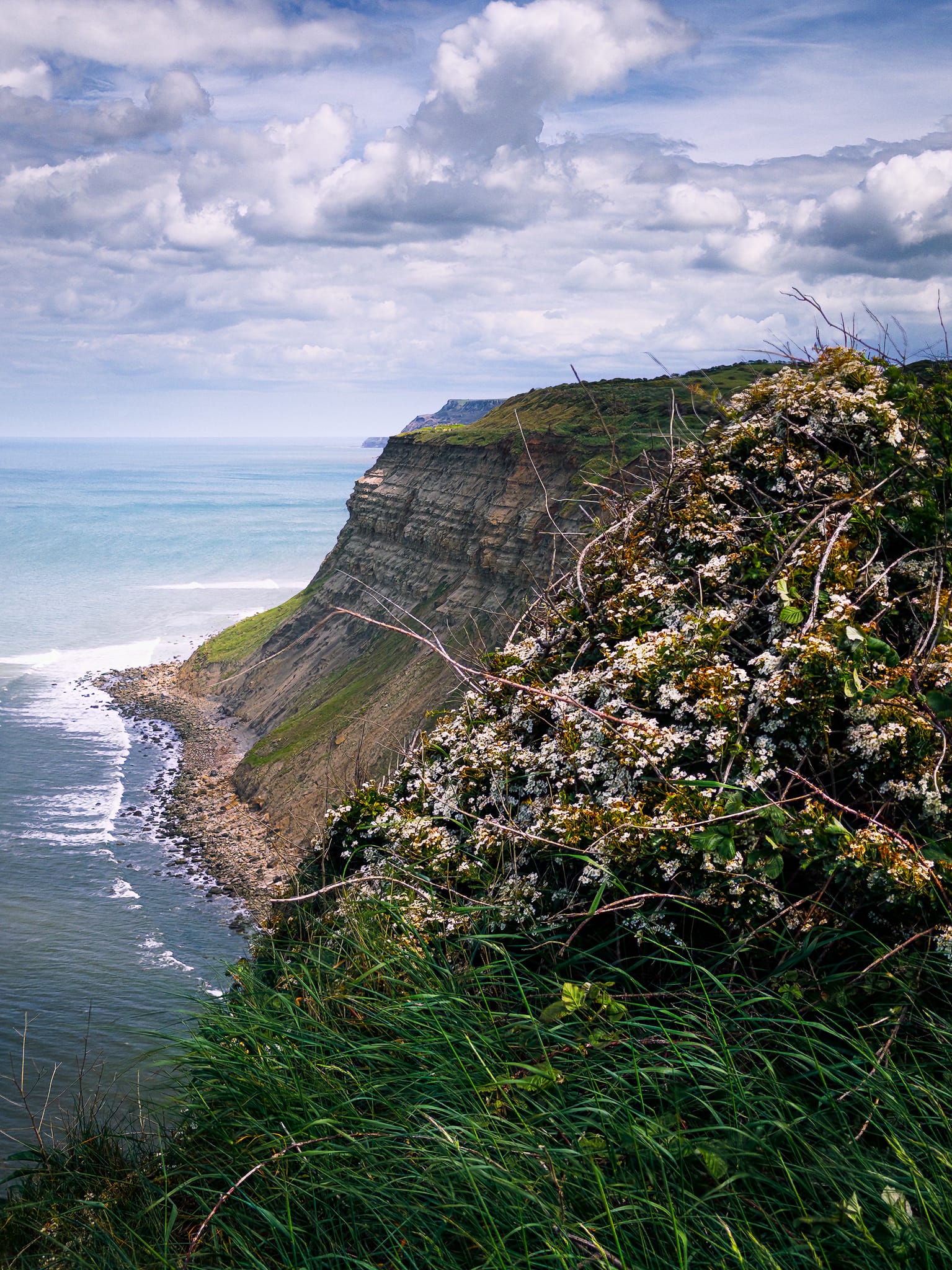
After meandering around the beach, it was time to join the Cleveland Coast Path up onto the cliffs. That meant views like this.
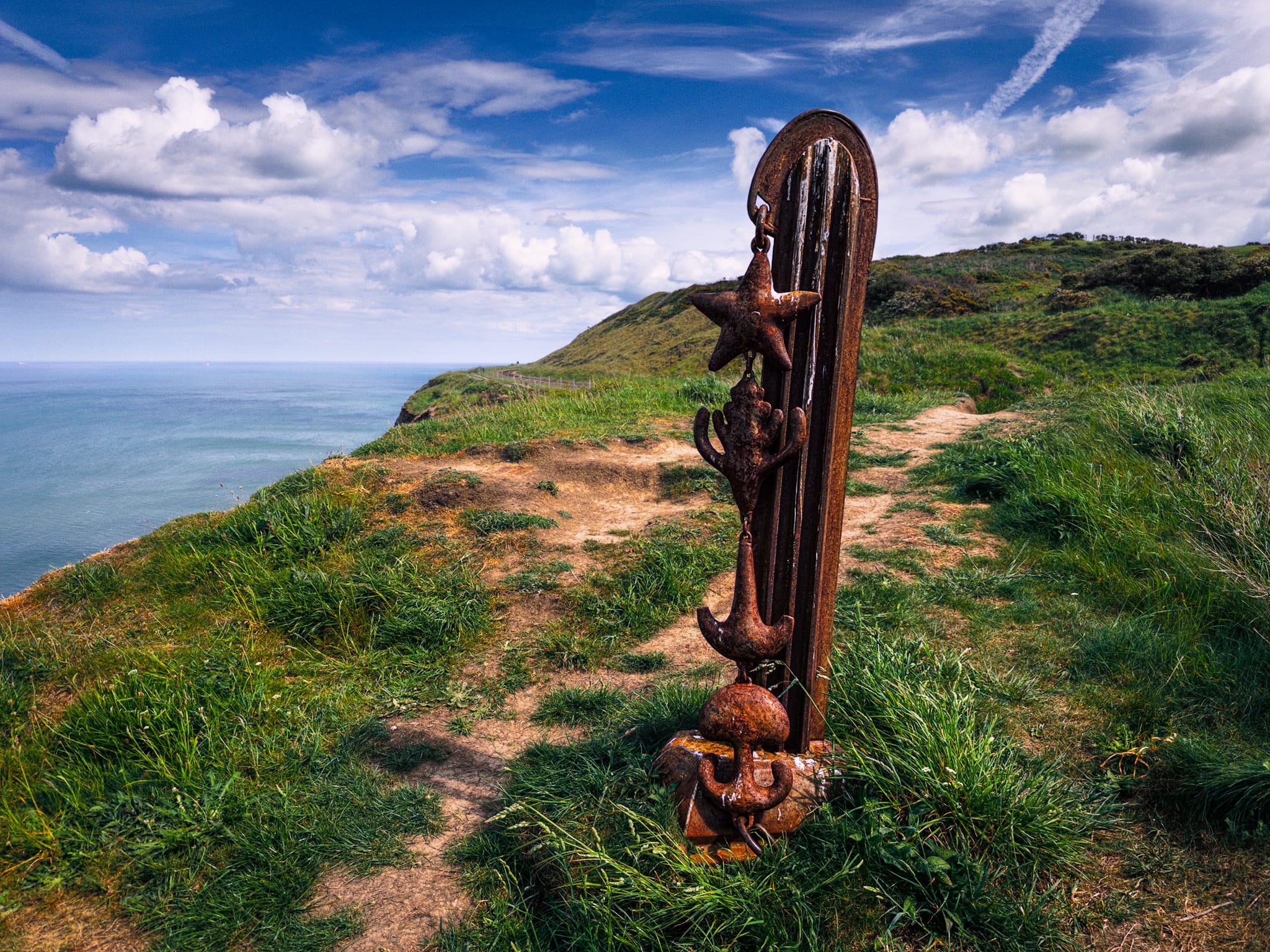
Along the way, we came across this interesting iron-wrought sculpture. This piece is called “Pillar”. Created by Richard Farrington in 1990 as part of a series of three clifftop steel artworks near Huntcliff on the Cleveland Way. The chain of four vertical metal charms on the post is designed to represent: A star at the top, the tip of a growing plant, the shape air makes when hitting a surface, and a jellyfish reflecting in the water at the bottom. Neat.
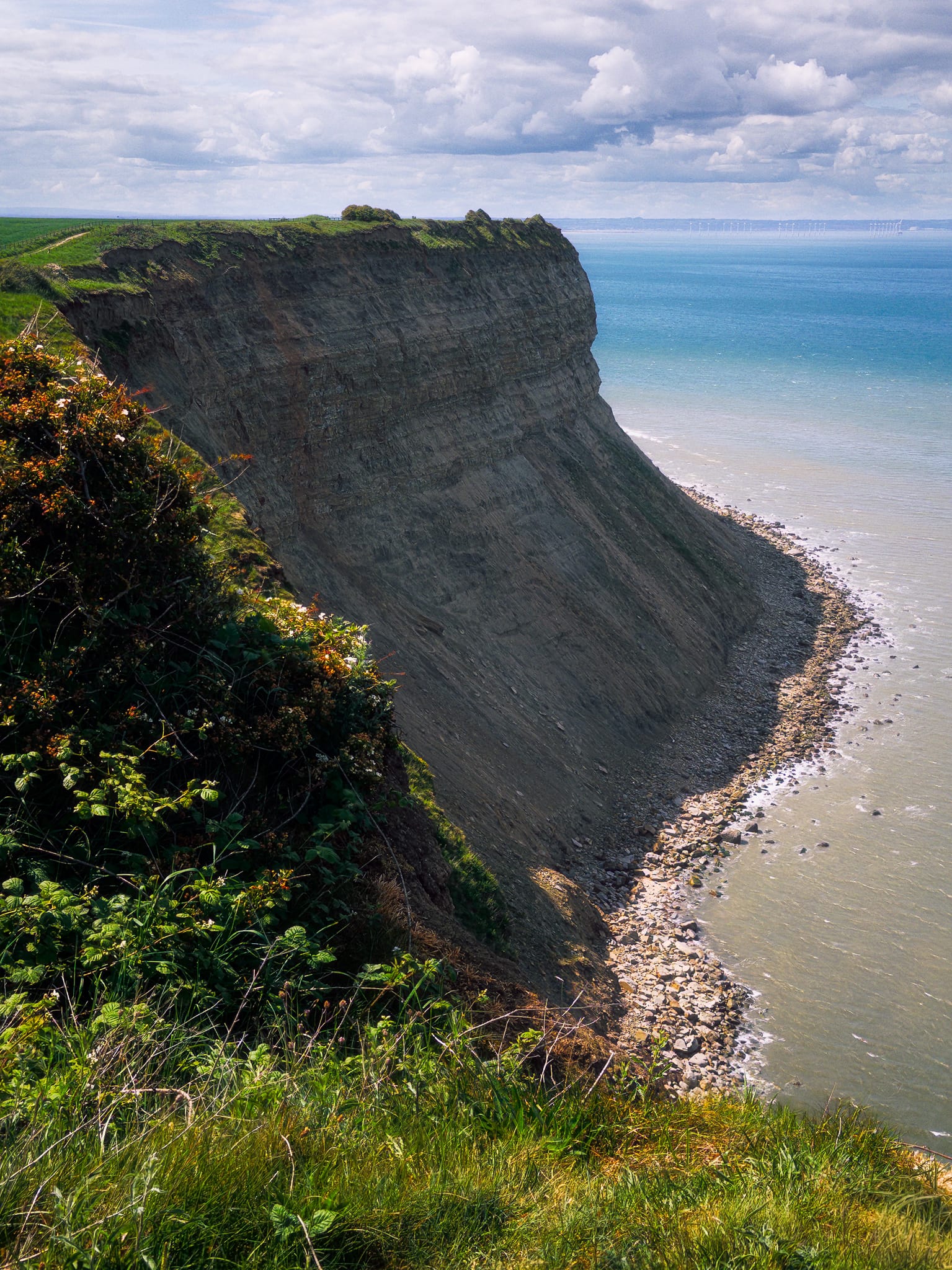
Parts of the path along the Cleveland Way have experienced heavy erosion. You wouldn’t want to mess with a drop like this.
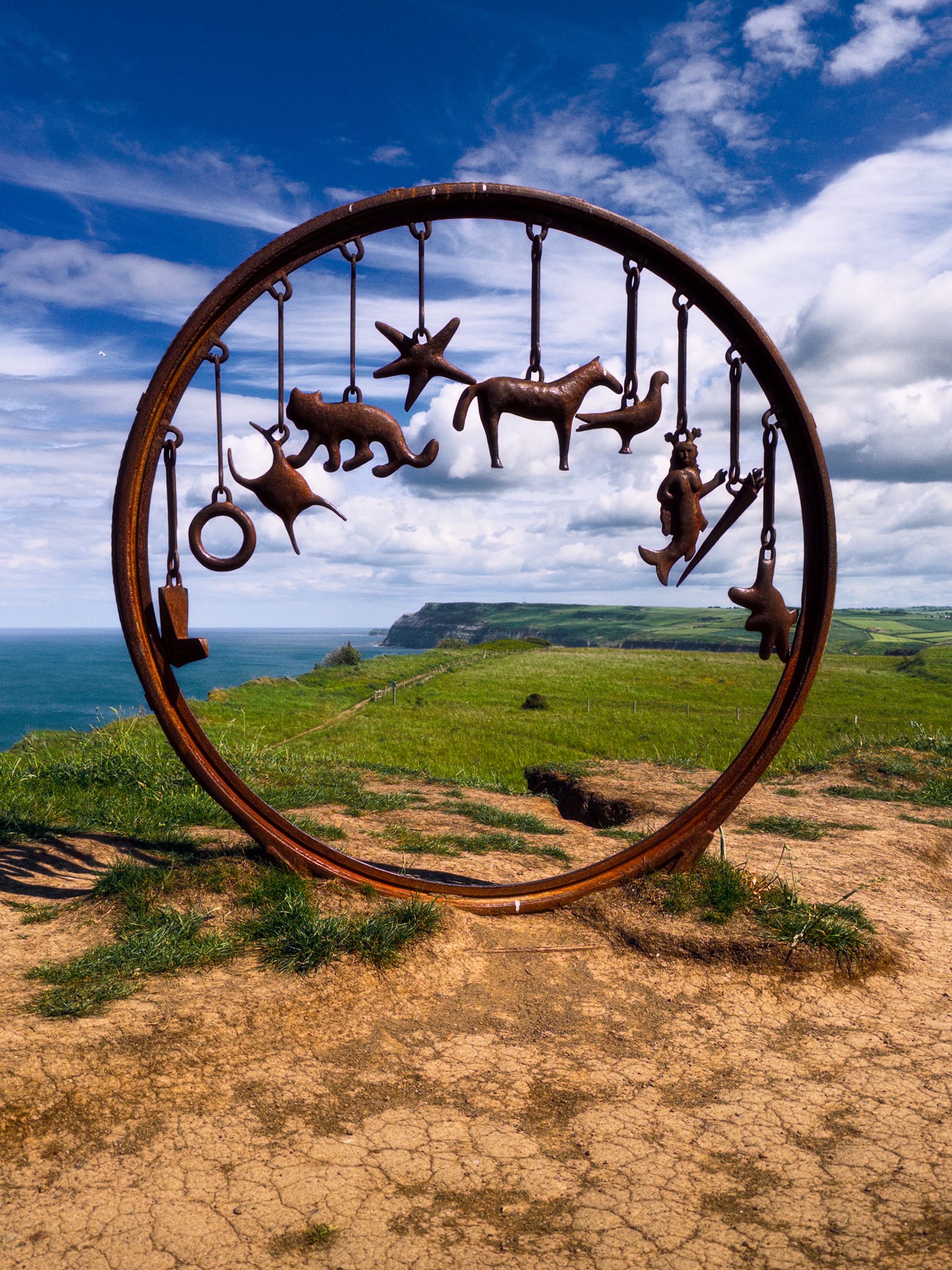
The next sculpture along the clifftop walk is officially called “Circle”, but locals know it as “the Charm bracelet”. Richard Farrington wanted to bring together a “collection of random things” and on a visit to the area he noticed lots of local women wearing charm bracelets. He used this as inspiration for the piece deciding it would help create something mystical.
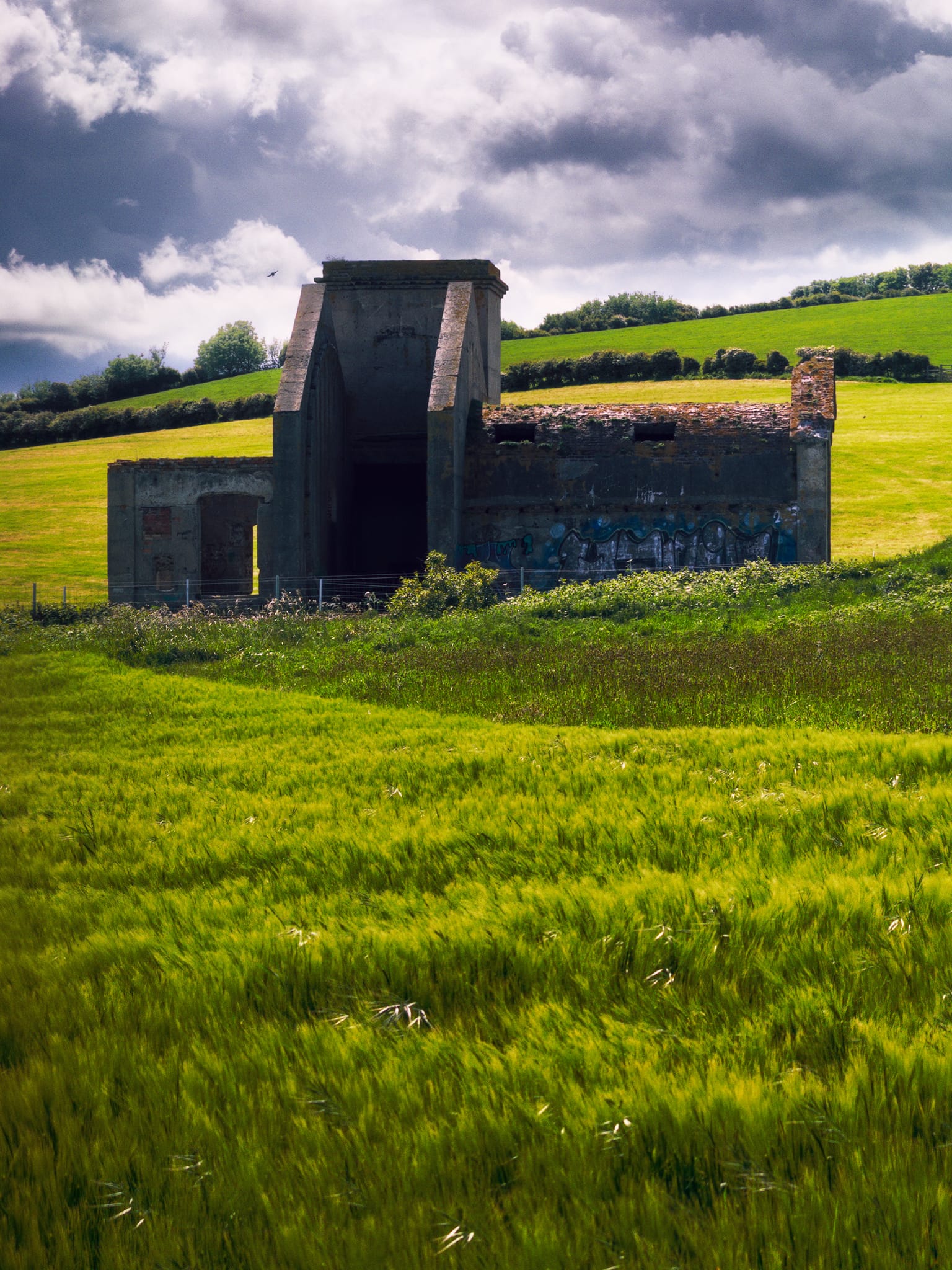
Further long the clifftop trail you’ll find the Huntcliff Guibal Fan House, a grade II listed ruin. Built around 1872, the concrete structure originally housed a massive 9-meter diameter ventilation fan for the Huntcliff Ironstone Mine. The mine operated from the 1870s until 1906; this building is the last major visible remnant of that industrial history. In front of it, the fields of wheat waved hypnotically in the wind.
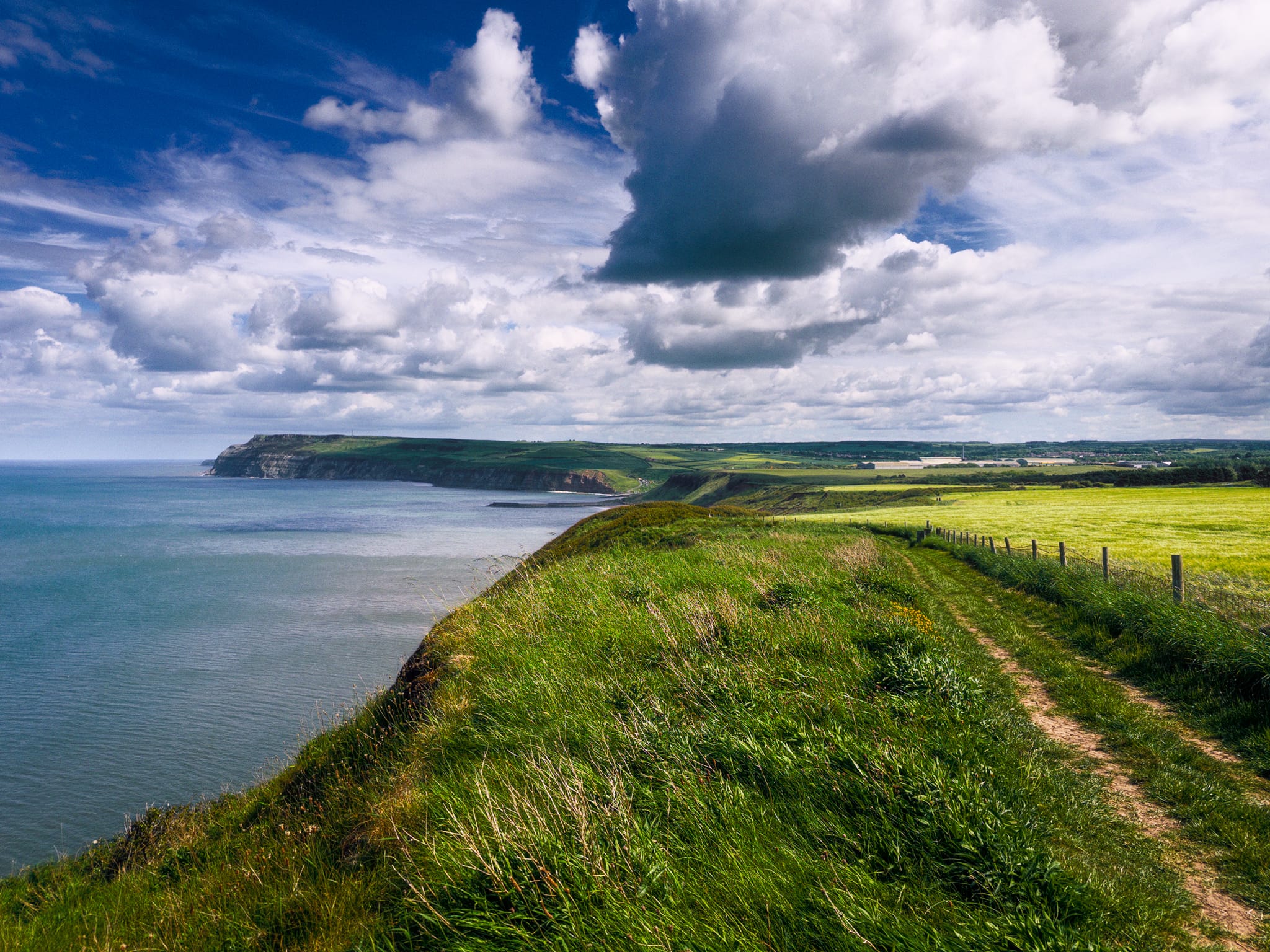
By this point, the trail started to descend down to Cattersty Sands before rising back up to the cliffs and into Hummersea Nature Reserve. I nabbed a final composition before we turned back and retraced our steps.
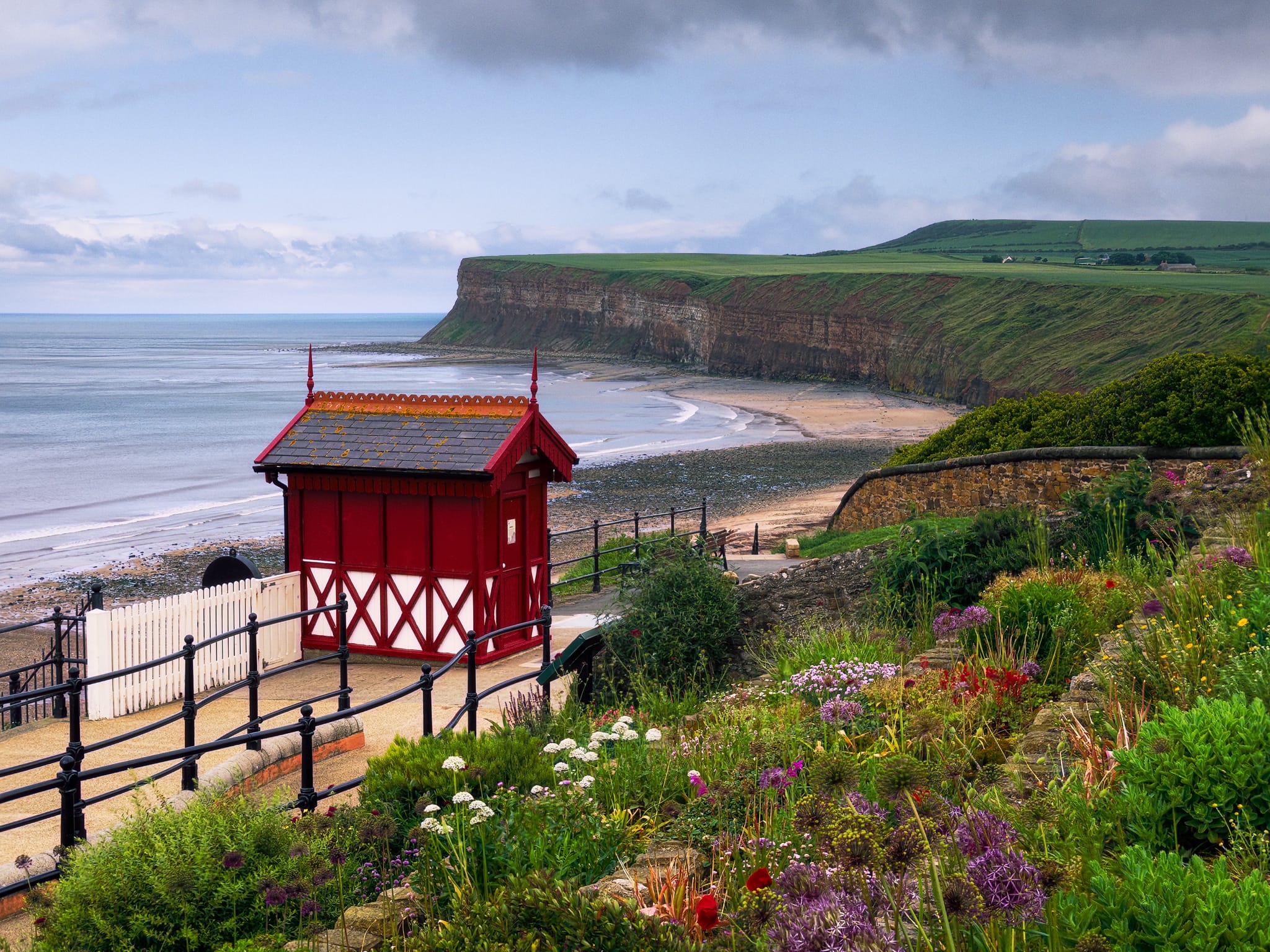
Back at Saltburn Fossil Gardens, featuring the Cliff Lift building and the southern cliffs.
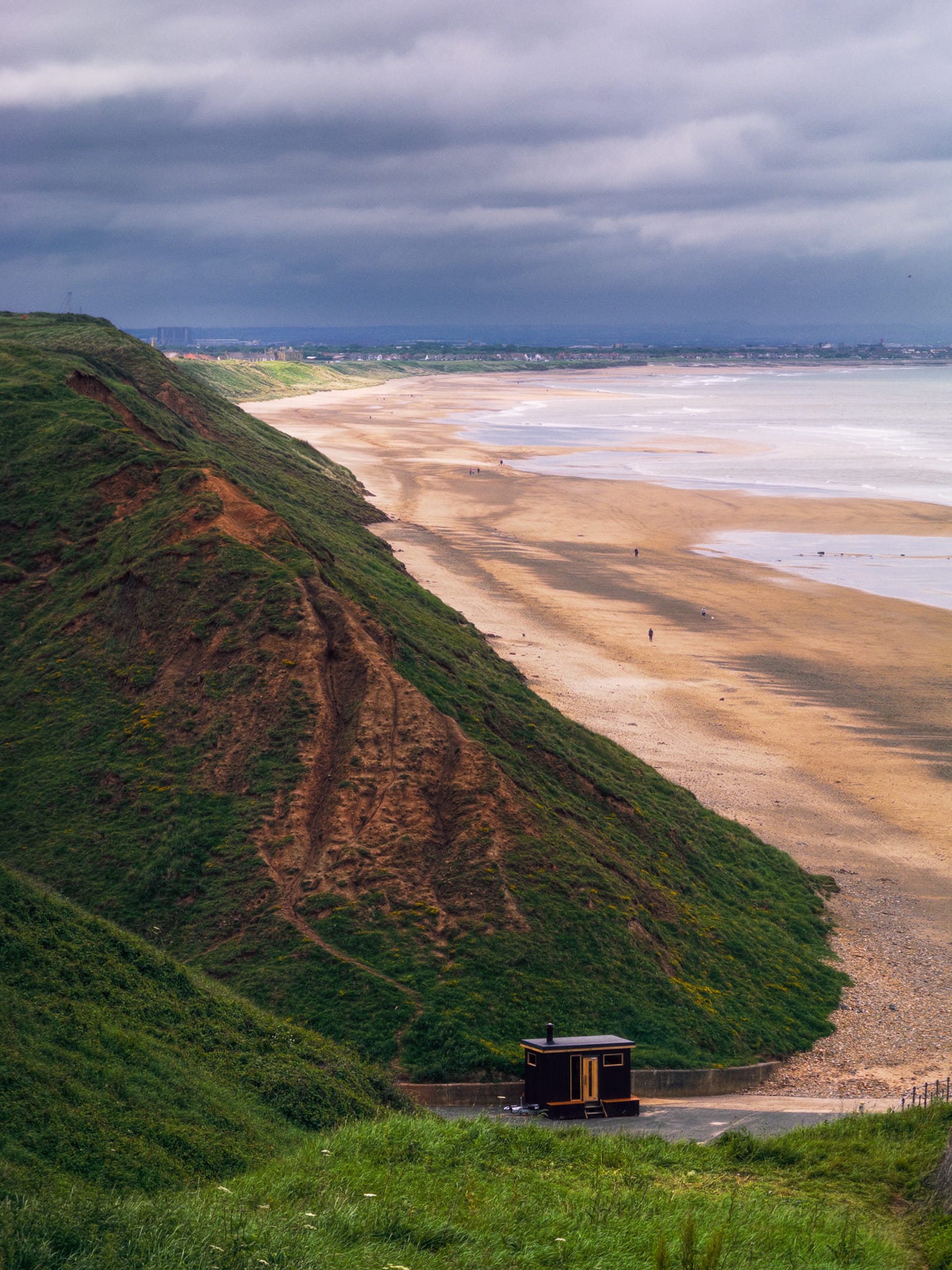
Looking north along the cliffs and dunes towards the beaches of Saltburn and Marske as a dark storm rolls in from the industrial town of Redcar.